First on an accident scene – what now?!

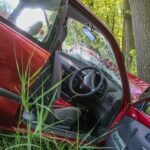
Enjoying a podcast while driving from Bloemfontein to the Eastern Cape, marketing specialist and digital creator Lara Rossouw’s signal dropped about 20 km outside Jansenville. A few kilometres later, she stumbled upon an accident scene. Smoke, steam, and silence. It didn’t take her long to realise: “I’m the first person to arrive at the scene of a head-on collision.”
Alone and overwhelmed, she feared the cars might explode. “My first instinct was fear – fear of an explosion. I was almost too scared to approach, waiting for this to happen,” Lara recalled, but she pushed through the panic. In one car, a man appeared lifeless. In the other, a woman screamed in agony. “As I moved closer, I saw what looked like a small child wrapped in a white blanket on the dashboard. My heart sank.” It turned out to be a wig caught in the airbag – a small mercy in a chaotic moment with no immediate help in sight.
The driver and passengers were trapped, disoriented, and in pain. He told her there were five people in his car. She could only see three. Panic set in. Then, two more vehicles arrived. Lara praised God out loud.

“As I moved closer, I saw what looked like a small child wrapped in a white blanket on the dashboard. My heart sank.” (Photo: Lara Rossouw)
It took over an hour for emergency services to arrive. Thankfully, two trained medics in a passing vehicle stepped in, guiding bystanders and stabilising victims. Without them, Lara and others – untrained and emotionally shaken – would have been left to manage the chaos alone.
“We took turns staying with the most critically injured, keeping them awake and calm while others tried to free trapped passengers. Three people had to be cut from the wrecks, but when emergency services finally arrived, there was still no ‘jaws of life’ on the scene. In the meantime, volunteers – producers/farmers, truck drivers, everyday people – used whatever tools they could find to pry open doors and move seats.”
Later, when she continued her drive, she kept replaying the day’s events in her mind. “What if it happened again? Would I know what to do?”
What Lara learned and what you should know, according to Arrive Alive
Lara’s experience exposed a harsh truth: most people are unprepared for roadside emergencies. Even those with first aid training struggled with the blood, screams, and trauma. It was a harsh reminder that knowing first aid theory and facing a traumatic event are worlds apart. And that uncertainty and realisation is what she wants to share. She consulted with Pieter Dahl from VR Medical for guidance about how to respond better next time, and help others do the same. Combined with advice from Arrive Alive, here is what to do.
Ensure your safety first
Park safely and switch on your car’s hazard lights. Assess the scene before approaching. Improve your visibility at night with a reflective jacket or belt, torch, or headlamp.
When there’s no signal
Between small towns and out on the open roads, cell reception often disappears. So, what can you do when you urgently need to call for help?
Pieter explains: “There’s a global emergency number that works via satellite – 112. It connects you to emergency services such as the police, ambulances, or the fire brigade even when there’s no cell coverage.”
When switching off your phone, you will see a “Power Off”, “Restart”, “Emergency Call”, and “Medical Info” button. Make sure that your (1) emergency contacts are loaded. This is also where you get the emergency number (112) to call; and (2) make sure to load your medical info.
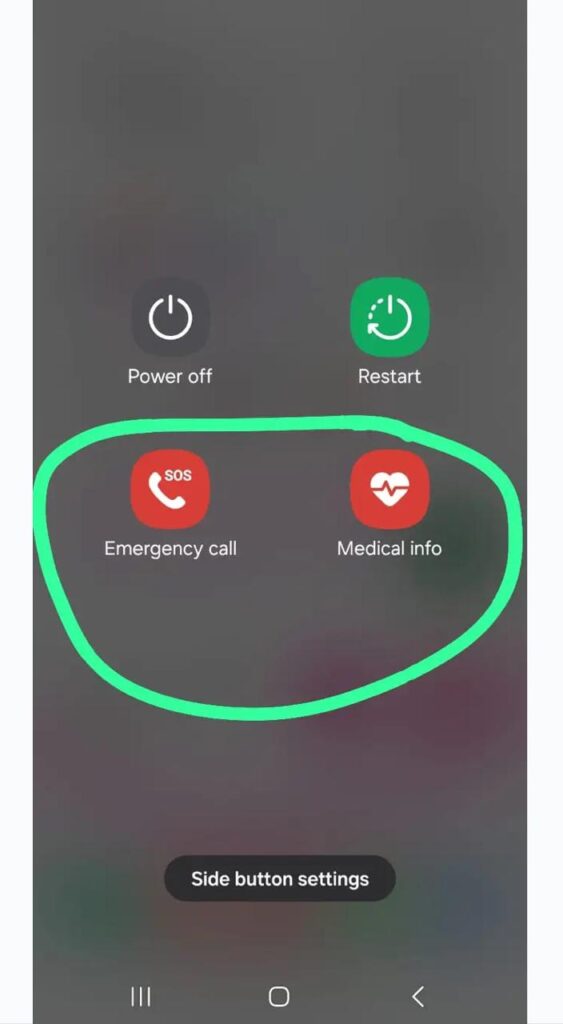
This is the screen where you can access your emergency calls. (Photo: Lara Rossouw)
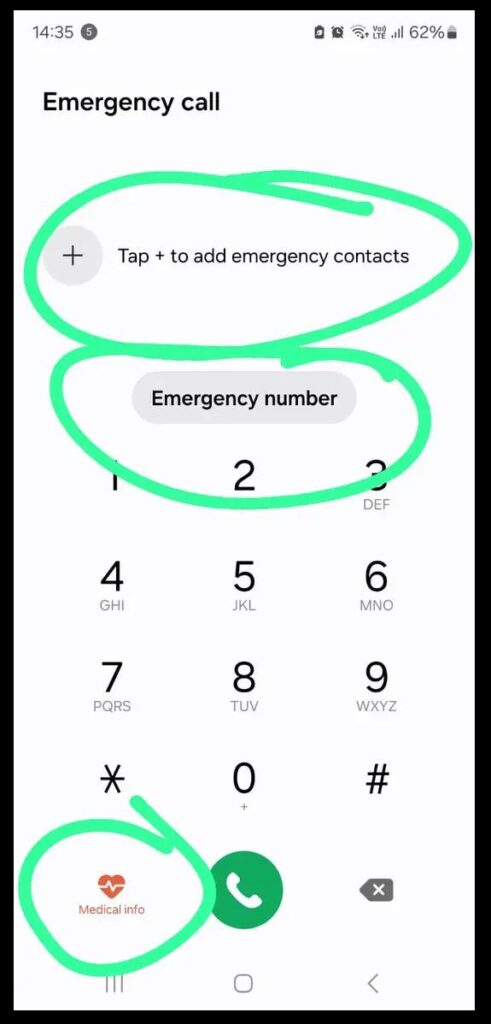
Ensure to load your medical info. (Photo: Lara Rossouw)
If there are injuries or entrapments, phone the ambulance service first, and then the police.
*Here are some important emergency numbers in South Africa:
- General Emergency: 112
- Ambulance: 10177
- Fire Department: 10177
- Police: 10111
- Netcare 911: 082 911
- ER24 (Private EMS): 084 124
- Your personal emergency numbers
How to give your location
If you can’t send a location pin, you can still guide rescuers.
“All major routes in South Africa have route marker boards,” said Pieter. “These show the route name (for example N3), the section number, the kilometre position, and the direction of travel. Reading and reporting this information gives rescuers an accurate location,” he says.
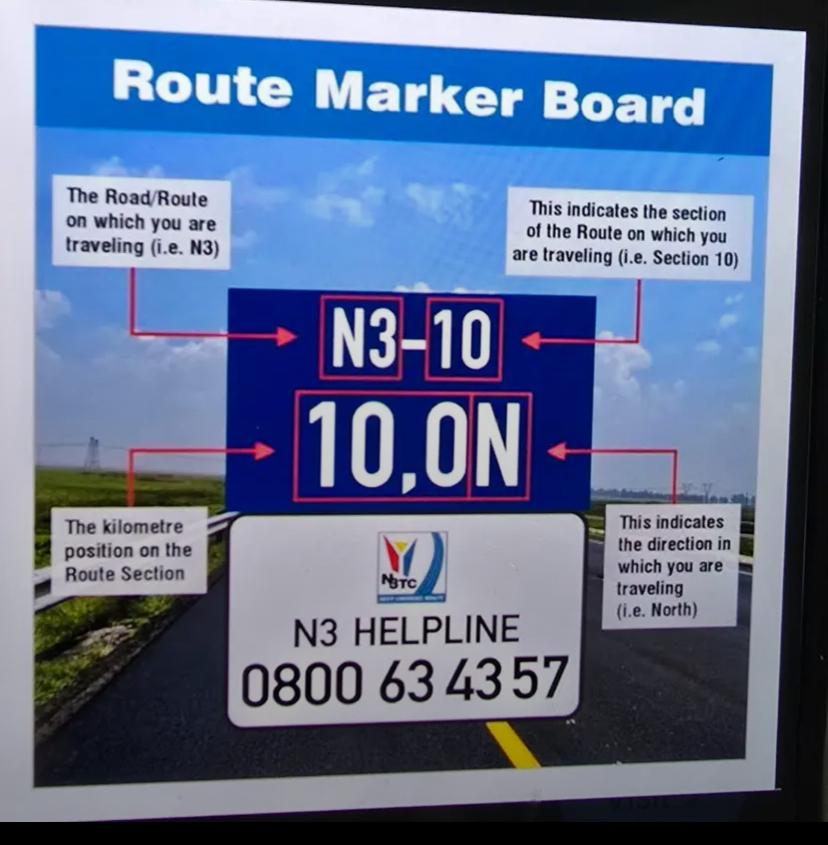
Locate the nearest route marker board to give your location very accurately. (Photo: Lara Rossouw)
These boards give the route name (N3), the section (10), the kilometre position on the route (10) and the direction of travelling. So locating the nearest route marker board will put you in a position where you will be able to give the location very accurately.
Will cars explode?
Many people fear that damaged cars will explode after a crash. Pieter reassures us: “It’s not like in the movies. Unless there are visible flames, the chance of a car exploding is extremely slim.”
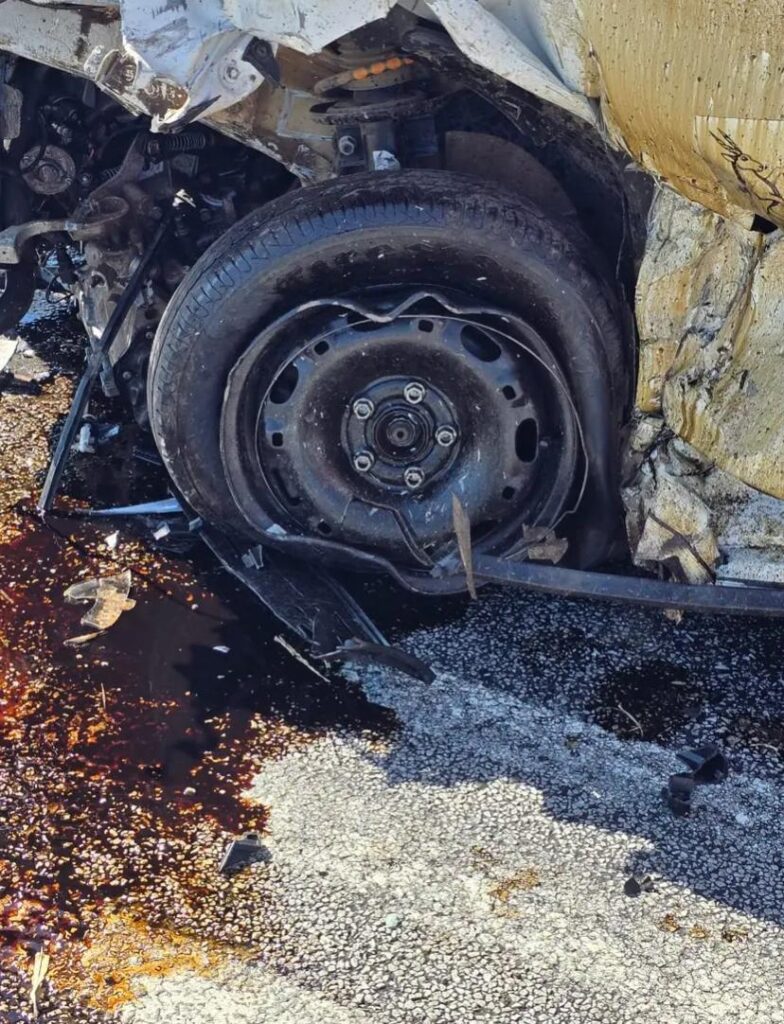
Unless there are flames, cars rarely explode. If flames are visible, remember: water won’t help. Use sand or a fire extinguisher if possible. (Photo: Lara Rossouw)
What information do you give the emergency operator
When you finally call for help, information can save lives. Be ready to share:
- How many vehicles are involved?
- How many people are in each vehicle?
- The condition of the injured (e.g., trapped, unconscious, bleeding).
“If paramedics know there are four injured people, they can send four ambulances,” Pieter explains. “If someone has died, police and pathology services need to be called. The more accurate your information, the faster the right help arrives.”
When someone asks for water
At the scene where Laura helped, one woman begged her for water, but the medic advised against it.
Pieter confirms: “Seriously injured patients often go straight from the scene into surgery. It’s safest not to give them food or drink.”
What you can do before help arrives
Even with no medical training, there are several ways the public can make a real difference before paramedics arrive:
- Apply pressure to bleeding wounds – even using a clean jersey or cloth, unless the blood comes from the ears or mouth.
- Ensure that victims have a clear airway, that they can breathe, and that blood can circulate.
- Mark the accident scene – put out triangles or cones at least 100 metres away to prevent secondary crashes.
- Cover petrol spills with sand – to reduce fire risk.
- Disconnect the car battery – if safe to do so – to prevent sparks.
- Gather information – how many cars, how many passengers, who is conscious, what injuries they mention.
- Keep people calm and still – movement can worsen spinal or internal injuries.
- Observe carefully – note who is quiet, unresponsive, or losing consciousness.
Counting heads: Why numbers matter
It’s common for accident victims to be thrown from vehicles – especially if they weren’t wearing seatbelts.
“If passengers say there were more people in the car than you can see,” Pieter warns, “believe them and search nearby. People can be flung through windows or into the veld.”
“As I moved closer, I saw what looked like a small child wrapped in a white blanket on the dashboard. My heart sank.”
When it’s too dangerous to wait
You may have heard that you shouldn’t move injured people – but what if staying in the vehicle means specific danger?
“The rule is life over limb,” Pieter says. “If the car is about to fall, catch fire, or poses another immediate risk, move the people out. Once they’re safe, lay them flat on level ground and keep them still.”
If flames are visible, remember: water won’t help. Use sand or a fire extinguisher if possible.
Practical items to keep in your vehicle
Pieter recommends a few simple items that can make a major difference in an emergency:
- Disposable rubber gloves
- A torch or headlamp
- A small fire extinguisher
- A reflective jacket, belt, and warning triangle
- Mini first aid kit
- Tyre repair Kit
- Jumper cables
- Seatbelt cutter and window breaker
- Water and non-perishable snacks (should you be stranded)
- Blanket or emergency poncho
“These aren’t just for helping others,” he adds. “They can save your own life if you’re ever in an accident yourself.”
A final thought
None of us want to imagine being first at an accident scene – but for those of us who spend long hours on the road, it’s a real possibility. Out there – where the cell signal fades, traffic thins, and help takes time – it’s up to us to be ready.
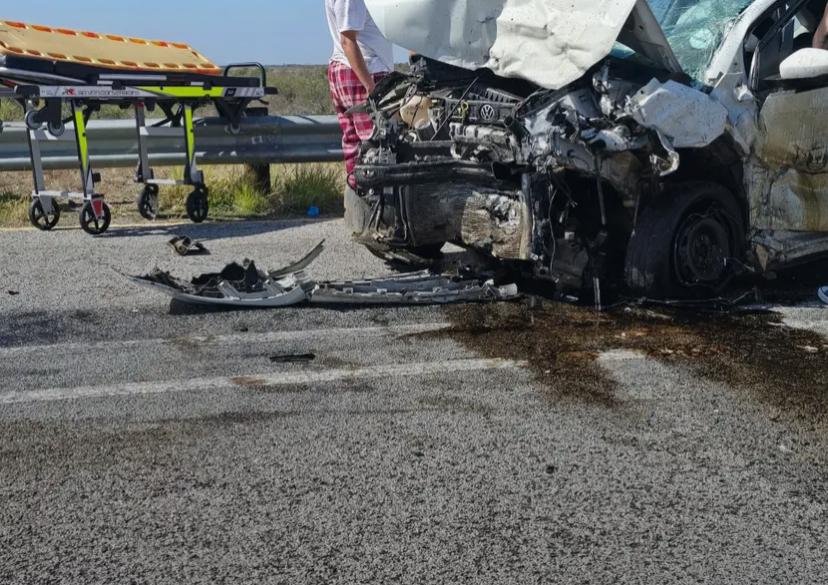
In emergencies where you need to exit the vehicle quickly, a combined seatbelt cutter and window breaker can be invaluable. (Photo: Lara Rossouw)
*Guidelines to keep close in case of an emergency:
- Know the emergency number: 112 works even without a cell signal.
(VR Med Emergency – 087 537 2662 – operates in the Free State but will also be able to give sound advice and assist with getting you help.)
- Use route markers alongside the road: These markers along major roads help pinpoint your location.
- Give clear info: Number of vehicles, passengers, and visible injuries help responders prepare.
- Don’t fear explosions: Unless there are flames, cars rarely explode.
- No food or water: Injured people may go straight to surgery.
- Do what you can: Apply pressure to wounds, cut battery cables, scatter sand on petrol spills, and set up warning triangles far from the scene.
- Observe carefully: Who’s quiet, who’s fading, and who might be flung from the vehicle.
- Keep these in your vehicle: Rubber gloves, torch, fire extinguisher, reflective gear, your own medical aid details (on your phone and windscreen)
- Have your own medical aid details available: Make it visible on your windscreen, on your phone, or keep a copy in the vehicle. (Even with private medical aid, government ambulances will transport you to a public hospital if your medical aid info is unavailable.)
*How else can you prepare:
- First Aid Kit-A well-stocked first aid kit is crucial for addressing minor injuries or medical emergencies. Compact kits are available, such as the M2 Basics 10-Pack Mini First Aid Kit Bundle, which includes 50 essential pieces per kit. These kits are ideal for travel, camping, or daily commutes.
- Jumper Cables-Dead batteries are a common issue. Having a set of jumper cables allows you to assist others or receive help when needed. For instance, the US Basic Drive-Time Vehicle Emergency Kit includes 50A CCA booster cables, along with other essential tools.
- Tyre Repair Kit-A flat tyre can leave you stranded. A tyre repair kit enables you to fix minor punctures temporarily, allowing you to reach a service station. Some kits, like the First Secure 90-Piece Car Emergency Roadside Kit, include a tyre repair kit among other tools.
- Fire Extinguisher-A small fire extinguisher can be lifesaving in case of engine fires or other emergencies. It’s advisable to have one that complies with local regulations.
- Reflective Warning Triangle-In case of a breakdown, placing a reflective triangle behind your vehicle increases visibility and alerts other drivers, reducing the risk of accidents.
- Seatbelt Cutter and Window Breaker-In emergencies where you need to exit the vehicle quickly, a combined seatbelt cutter and window breaker can be invaluable. These tools are designed for rapid escape in critical situations.
- Blanket or Emergency Poncho-In case of being stranded in cold weather or during rain, having a blanket or emergency poncho can provide warmth and protection.
- Multi-Tool-A multi-tool can serve various purposes, from cutting to opening bottles, and can be handy in numerous situations.
- Gloves-Protect your hands when handling tools, changing tyres, or dealing with hazardous materials. Safety gloves are an essential part of your emergency kit.
- Water and Non-Perishable Snacks-Having a supply of water and snacks can be crucial if you’re stranded for extended periods. Ensure they are stored in a way that they remain safe to consume.
Be ready for the unexpected
This experience serves as a reminder to us all: safety isn’t just about driving carefully – it also includes being prepared for the unexpected.
Out on our rural roads, especially during the busy holiday season, help can take a long time to arrive. We often drive long distances alone, through areas with no signal, no traffic, and no nearby medical support. Each of us could be the first on the scene of an accident. Our reaction in those first few minutes can make all the difference.
So, as we head into the festive season, let’s prepare for more than just the harvest or the road trips home. Let’s ensure we refresh our first aid training, keep a well-stocked emergency kit in our vehicles, and know who to call – even when there’s no cell signal.
Stay safe. Stay prepared. You never know when you’ll be the first responder.